America's Top 25 Haunted Locations
The most investigated, most documented, and most terrifying locations in the United States — as recorded by GoBaan investigators
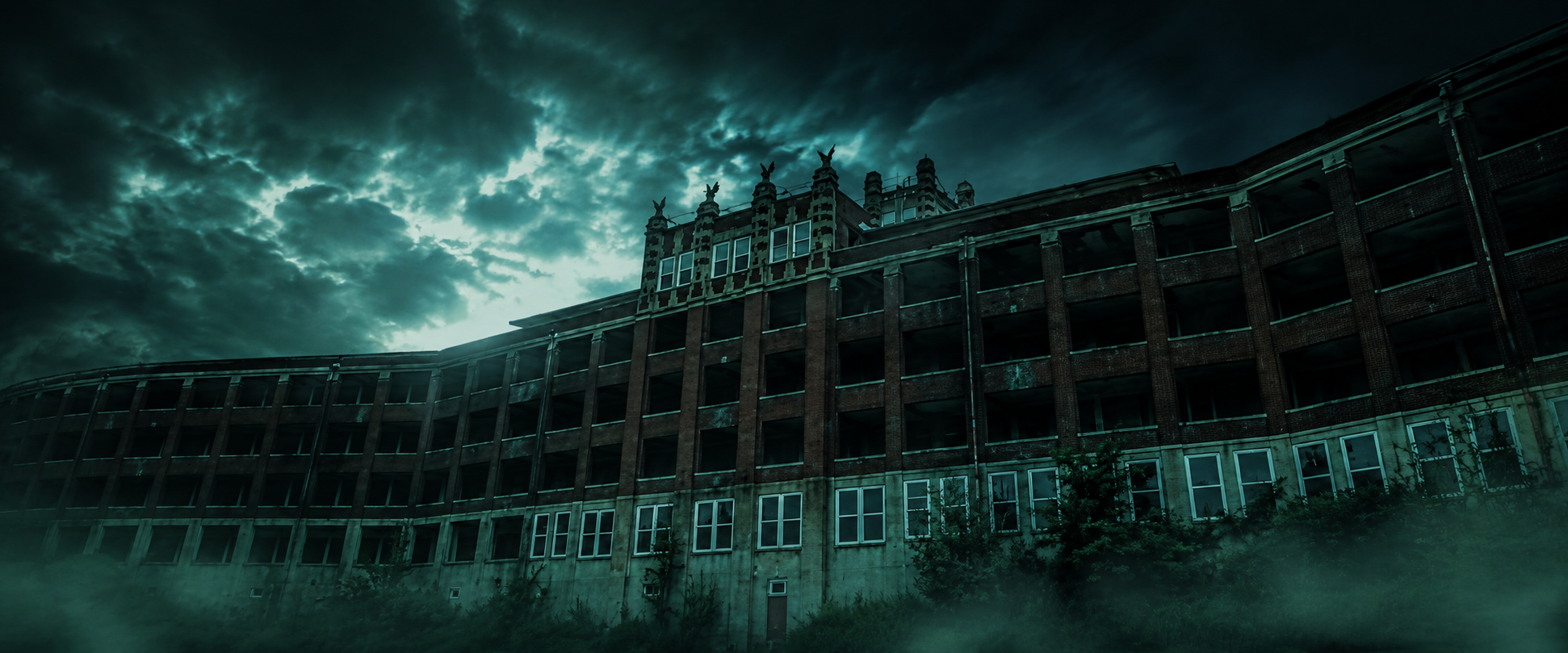
Something heavy lives inside Waverly Hills — not just the memory of the eight thousand or so who died here, but something that seems to know you've arrived. Walk the fifth floor and Room 502 pushes back with a dread visitors struggle to name. Deep below, the Body Chute — a tunnel built to slip the dead out unseen, so the living patients wouldn't count the gurneys — swallows flashlight beams and returns knocking, moaning, the sense of being followed. Leave a ball on the fourth floor and folklore says Timmy will roll it back.
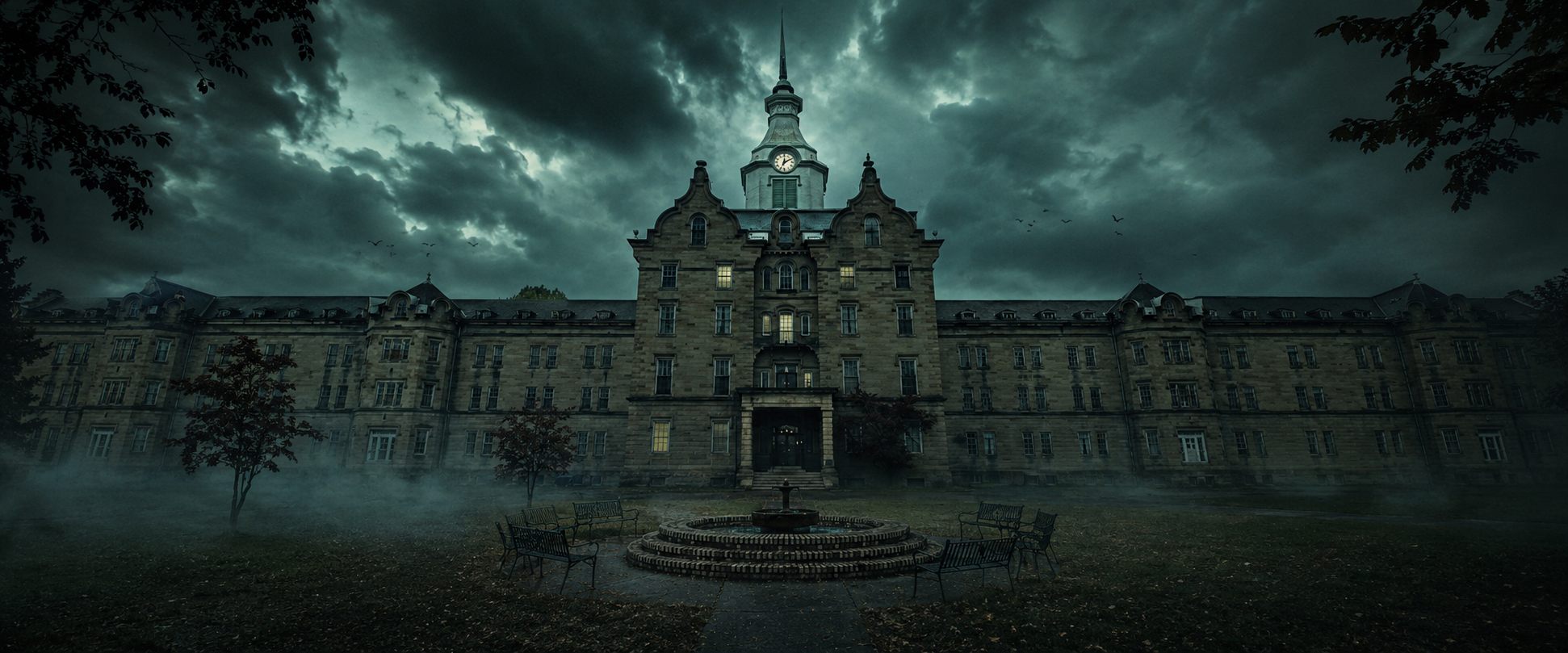
Trans-Allegheny Lunatic Asylum feels built to echo. Its long Kirkbride corridors, patient wards, isolation rooms, morgue, and operating spaces are tied to reports of voices, footsteps, shadows, cold spots, screams, and figures seen where no living person should be. The haunting is often described as crowded rather than singular: patients, staff, and darker presences layered into a building that held generations of suffering. At night, the asylum does not feel abandoned. It feels occupied by memory that has learned to move.
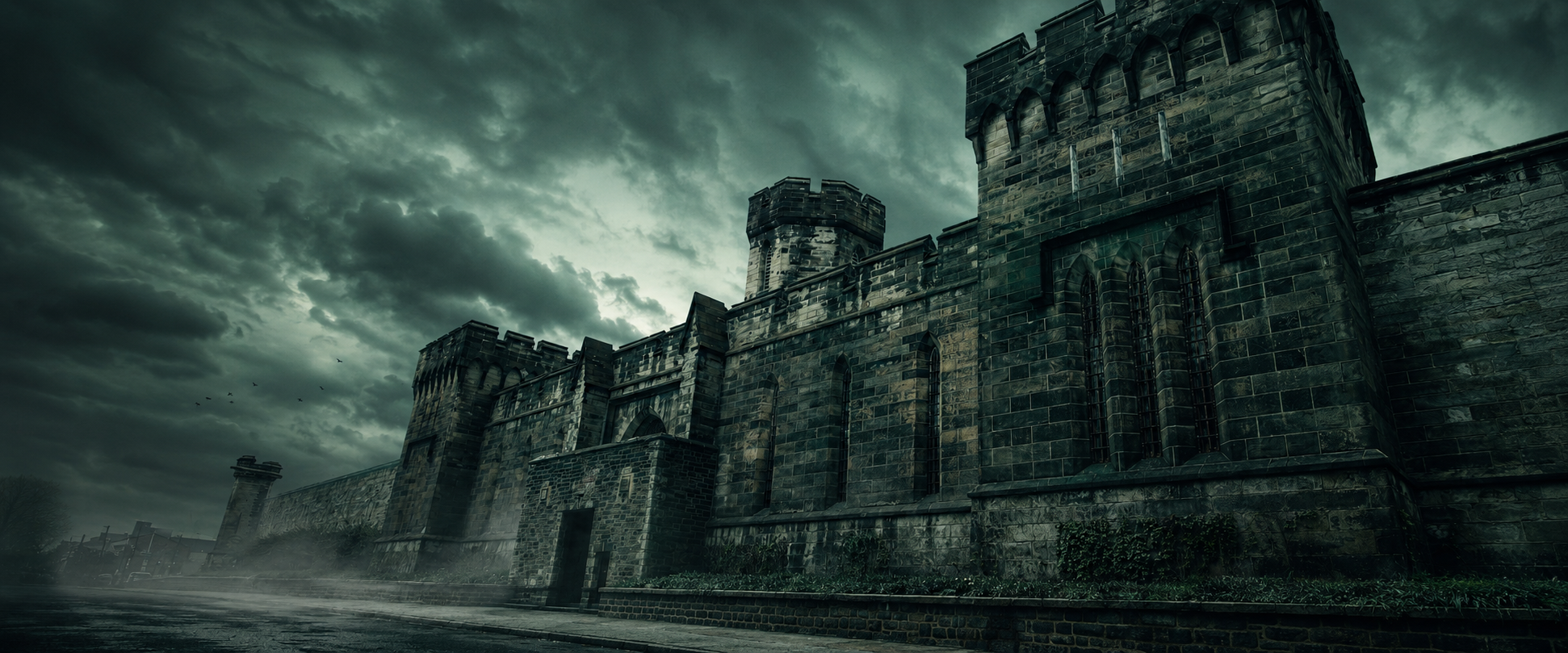
Step through those Gothic gates and the air changes — thicker somehow, heavier with something that never quite left. Visitors swear they hear cell doors slam in blocks where the hinges haven't moved in decades. In Cellblock 4, a locksmith once reported being frozen in place by a blast of cold air as faces pressed outward through the walls. Al Capone himself — hardened as they came — reportedly saw the ghost of a St. Valentine's Day victim in his own lavish cell. Stand there long enough, and people say you feel it too: the unmistakable sense that something is watching you right back.
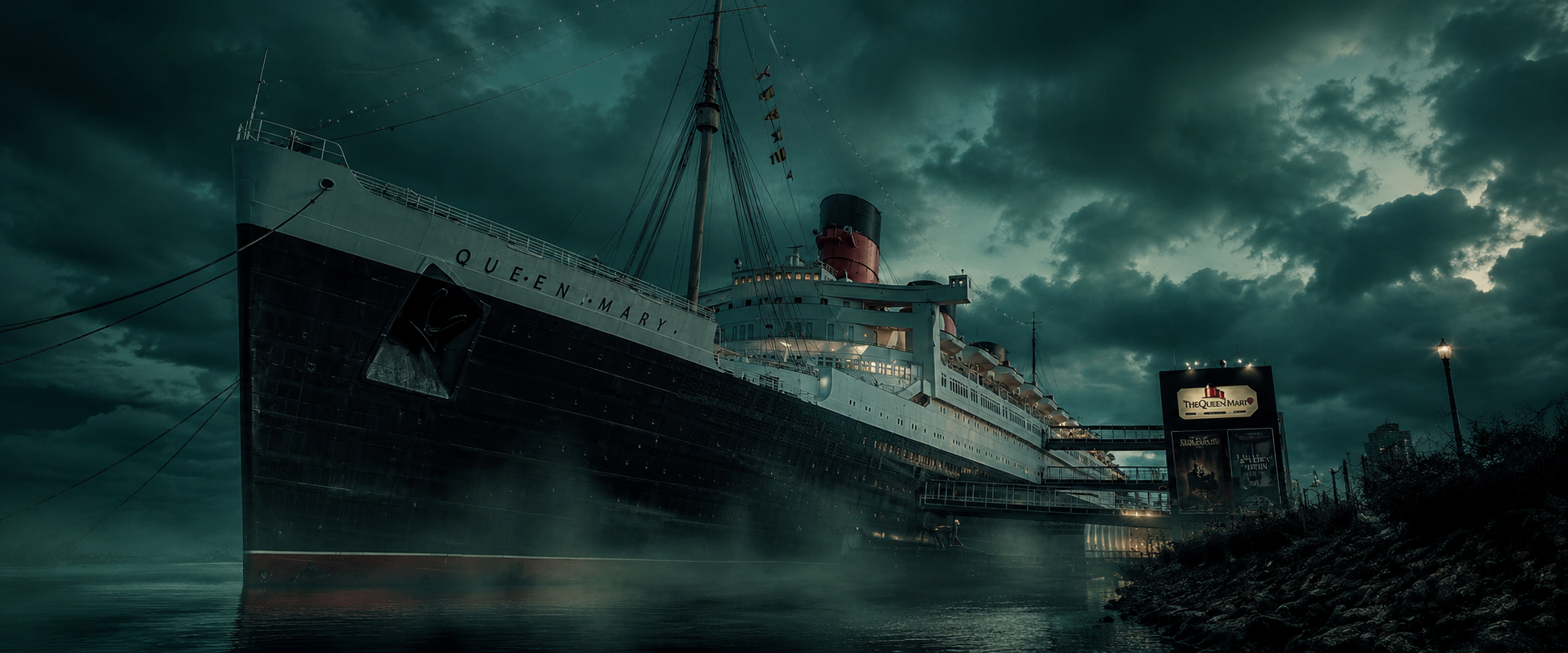
She hasn't moved in decades, but something aboard the Queen Mary refuses to stay still. Visitors to the drained first-class pool report wet footprints circling the tile and a little girl's laughter echoing off the mother-of-pearl ceiling — Jackie, they say, still playing at the edge of water that's been gone for years. Down in the engine room, people swear a young crewman whispers behind them at Watertight Door 13, then vanishes when they turn. Stand alone in Stateroom B340 long enough, and guests report the feeling that the room has already noticed you.
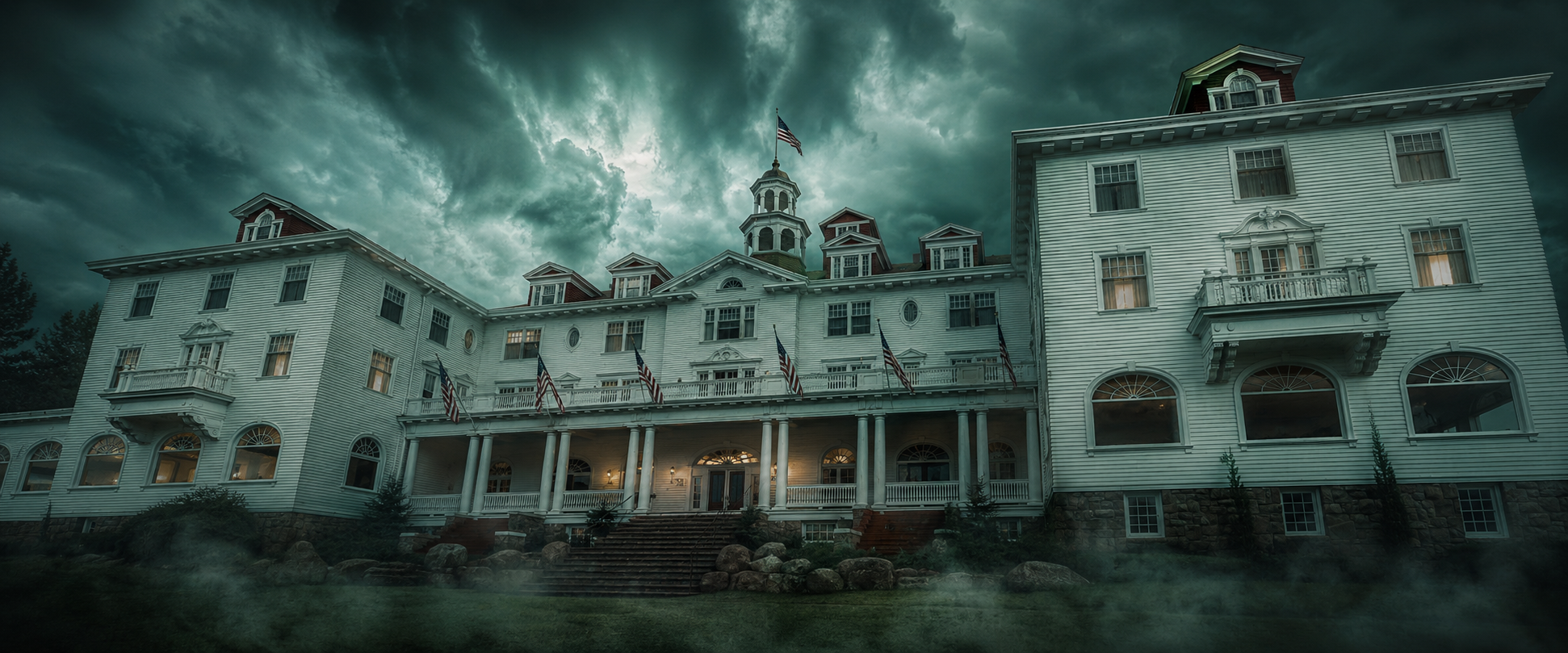
Room 217 is where it starts — where Stephen King woke from a nightmare of something chasing his son down an endless corridor and decided the world needed to know about it. Guests still report luggage unpacked by unseen hands, lights that toggle on their own, and the faint sound of piano keys drifting from an empty ballroom. A phantom child is spotted calling out in empty hallways; a cowboy materializes at the foot of beds in Room 428. The Stanley does not feel haunted so much as occupied — like something here never checked out.
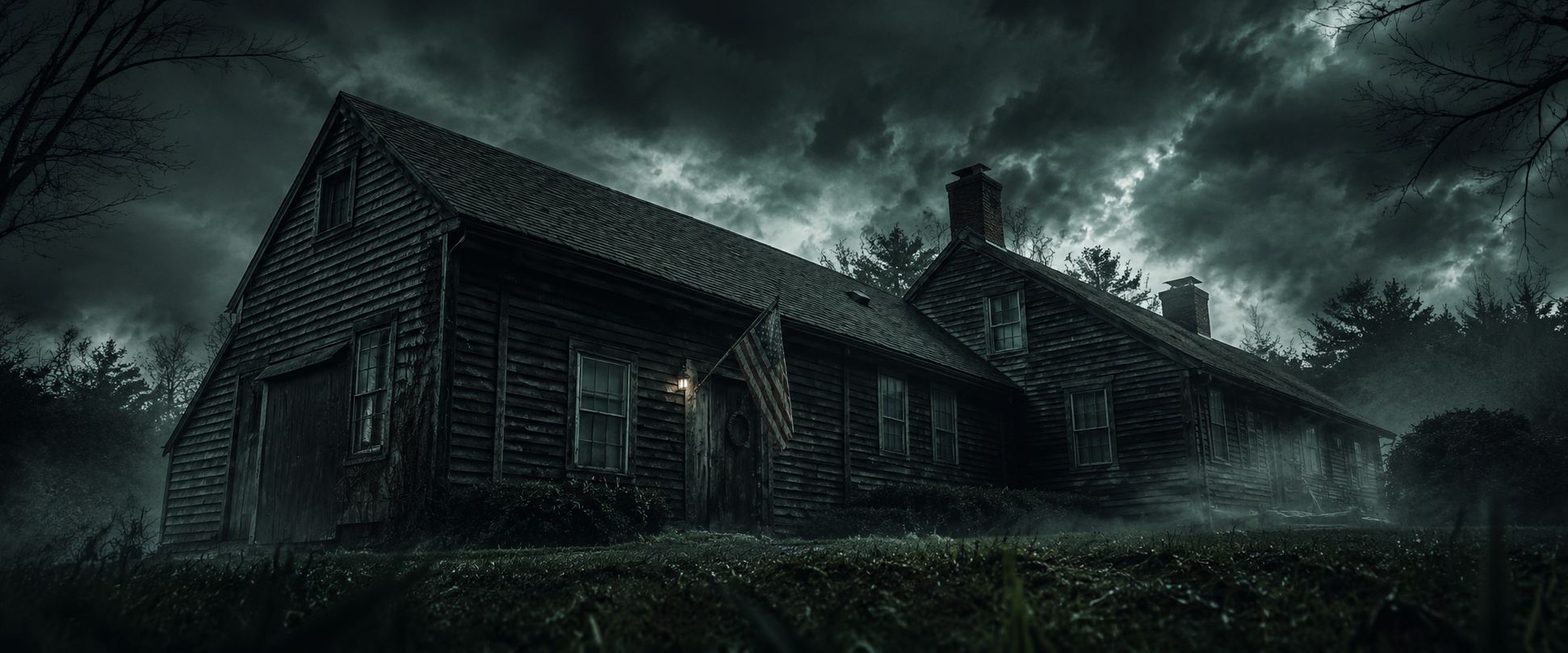
Stand in the Arnold farmhouse long enough and you start to feel like something is deciding whether to let you leave. The Perron family moved in during January 1971 and almost immediately the house began its introductions — strange odors drifting through sealed rooms, objects resettled by unseen hands, cold presences that pressed close in the dark. The worst of it, they say, fixed its attention on mother Carolyn: a malevolent force that people have long named Bathsheba, and that the Warrens reportedly confirmed was no ordinary haunting. Visitors still report the same slow dread the Perrons described.
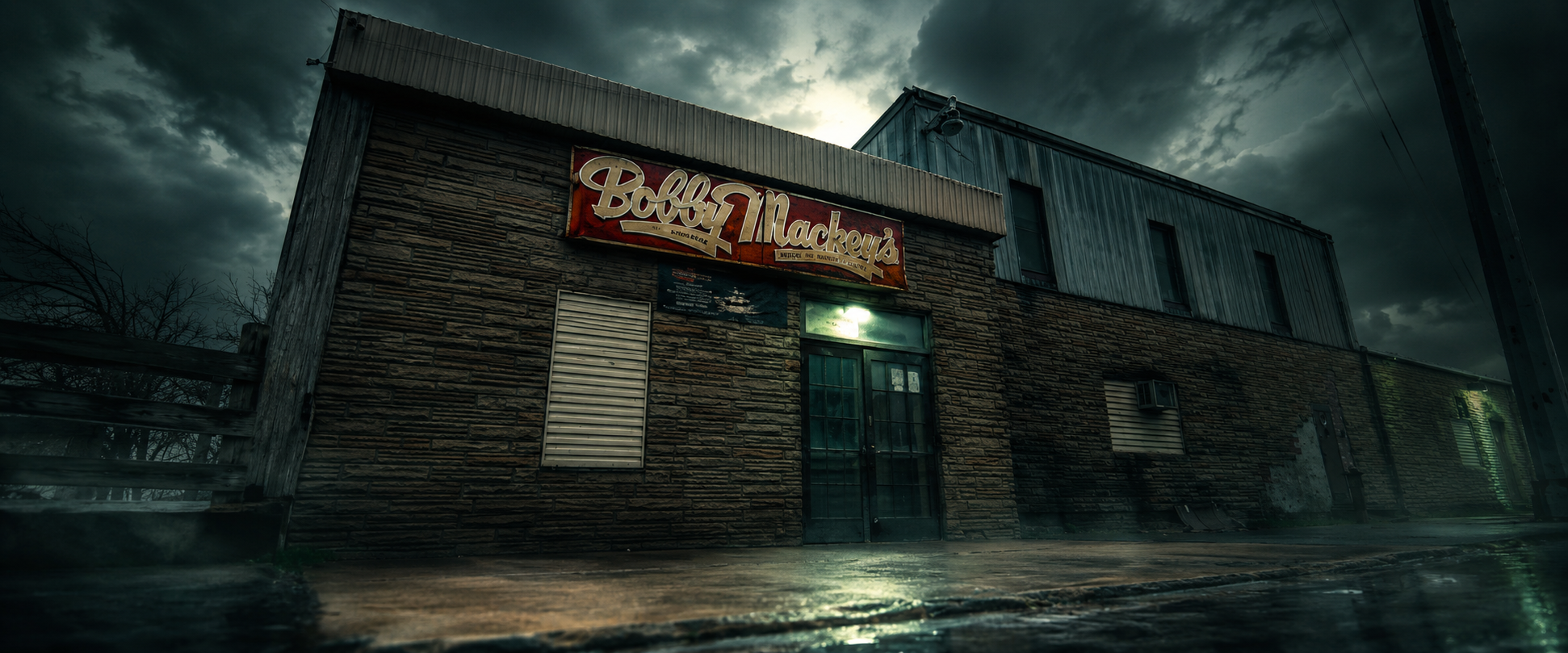
The basement well is where it all starts — a damp, dark pit that locals have long called a portal to hell. Down there, people say the air goes cold without warning, and something in the dark has been known to grab, shove, and hiss "get out" at those who linger. Johanna, a lovelorn spirit said to haunt the honky-tonk with the scent of roses, is reportedly the gentler presence — her caretaker once claimed she spoke to him daily, until the conversations turned violent. The building was demolished in 2024, but those who spent nights inside swear whatever lived there had no intention of leaving with the wrecking crew.
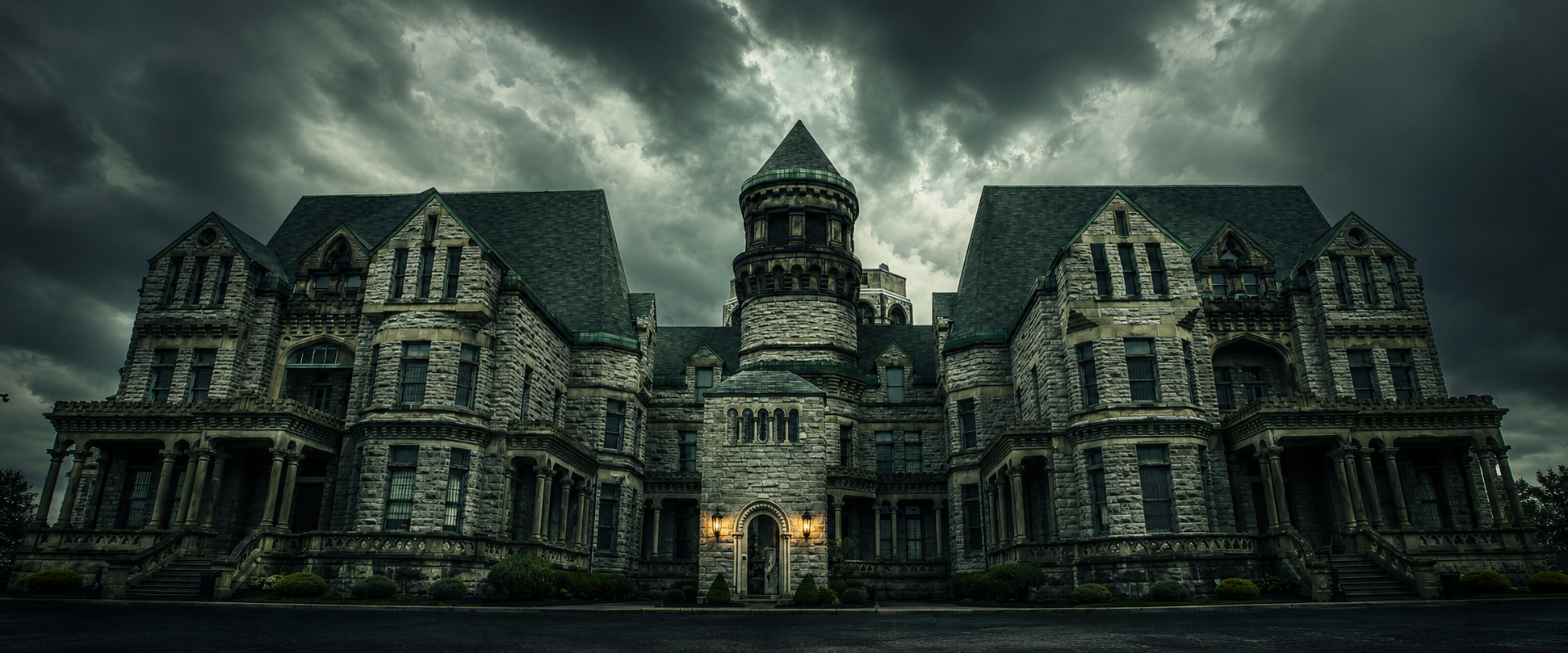
They say the Ohio State Reformatory doesn't let go of the dead — it keeps them. In the basement, visitors swear a 14-year-old boy beaten to death still flickers across the walls like a trick of light; something else lingers down there too, something heavier and without mercy. In the solitary cells of The Hole, people report nausea and the slow, crawling certainty of being watched. Up in the warden's quarters, some catch a ghost-scent of roses — Helen Glattke, killed by a stray gunshot in 1950, said to still haunt the bedroom she never quite left.
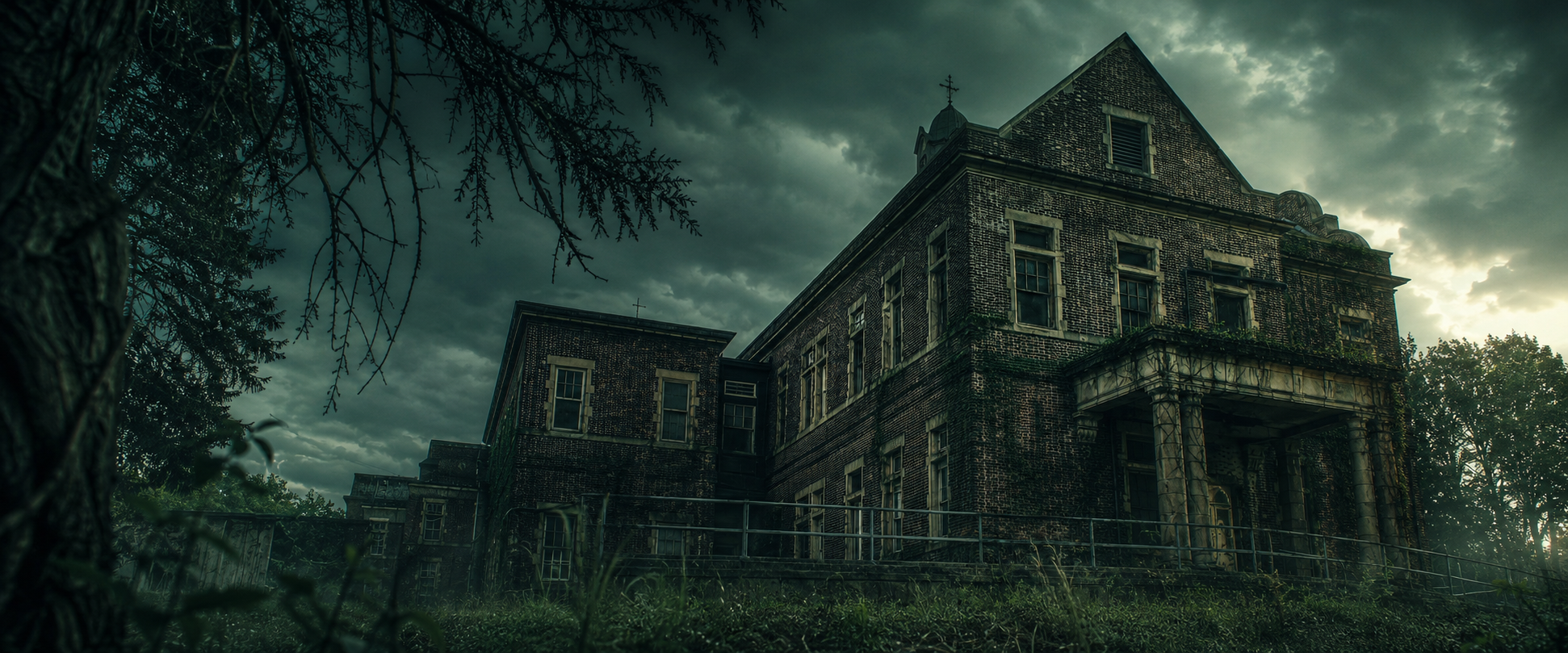
Walk the halls of Pennhurst after dark and the suffering doesn't feel historical — it feels present. Visitors swear they hear screams that have no source, feel a sudden, bone-deep heaviness, and catch shadow figures drifting through the corridors. The tunnels beneath the campus seem to hold something older and angrier. In the Quaker Building, people report being pushed and scratched. Down in the Mayflower basement, a smell of cigar smoke precedes something that doesn't want you there. Those who've been in these rooms say the building knows you've come in — and that it's still deciding what to do with you.
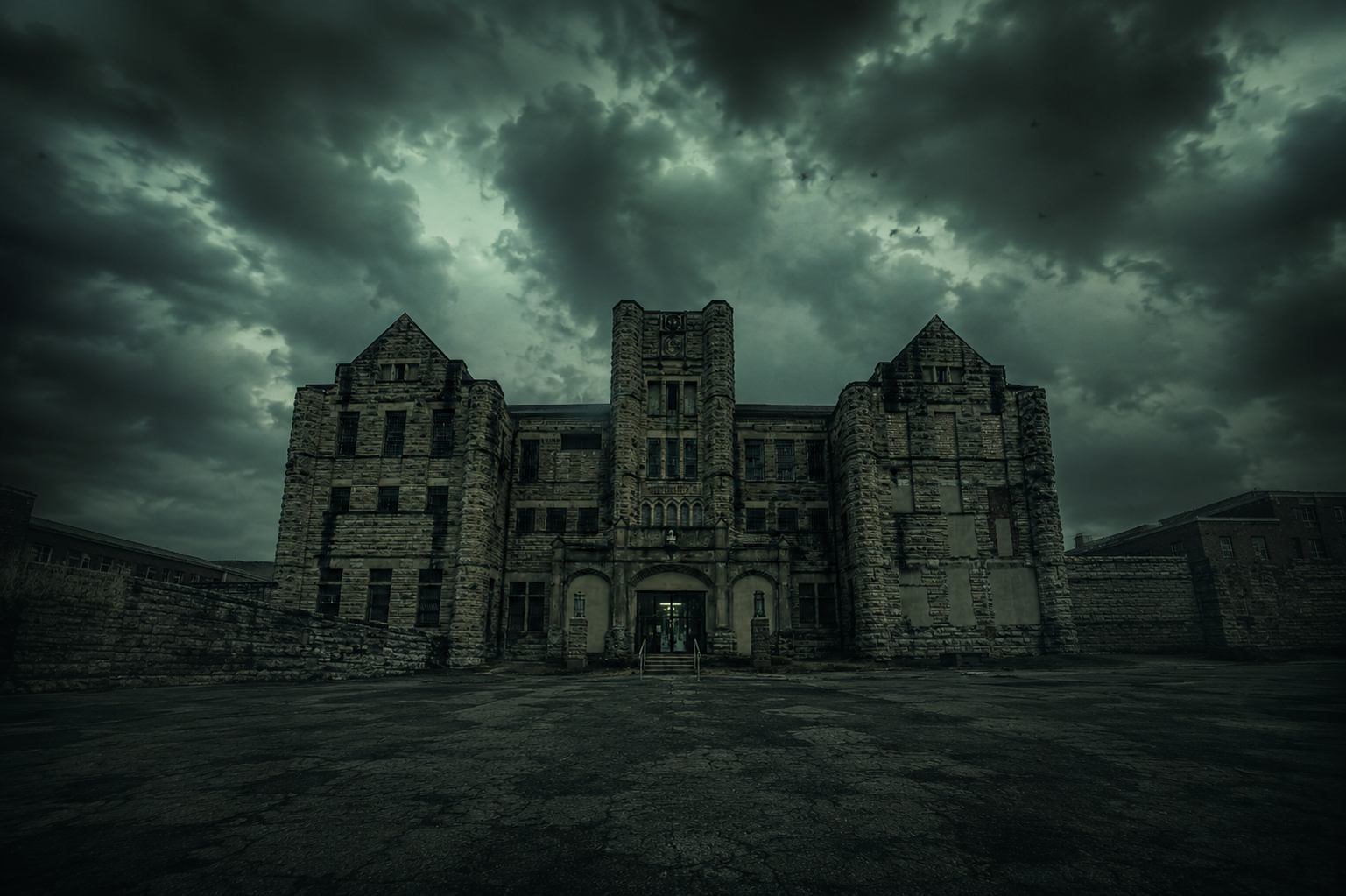
Time Magazine once called it "the bloodiest 47 acres in America," and standing inside A-Hall — the oldest building on the grounds — it's easy to feel why. Visitors swear invisible hands brush their skin in the dark corridors, and something breathes down your neck where no one is standing. A catwalk apparition drifts overhead. Shadow figures dart the cellblocks. The Gray Lady glides her familiar route through the women's wing, unbothered by the century between her and the living. Whatever soaked into these limestone walls over 168 years of suffering hasn't left — and those who linger after dark say it notices them first.
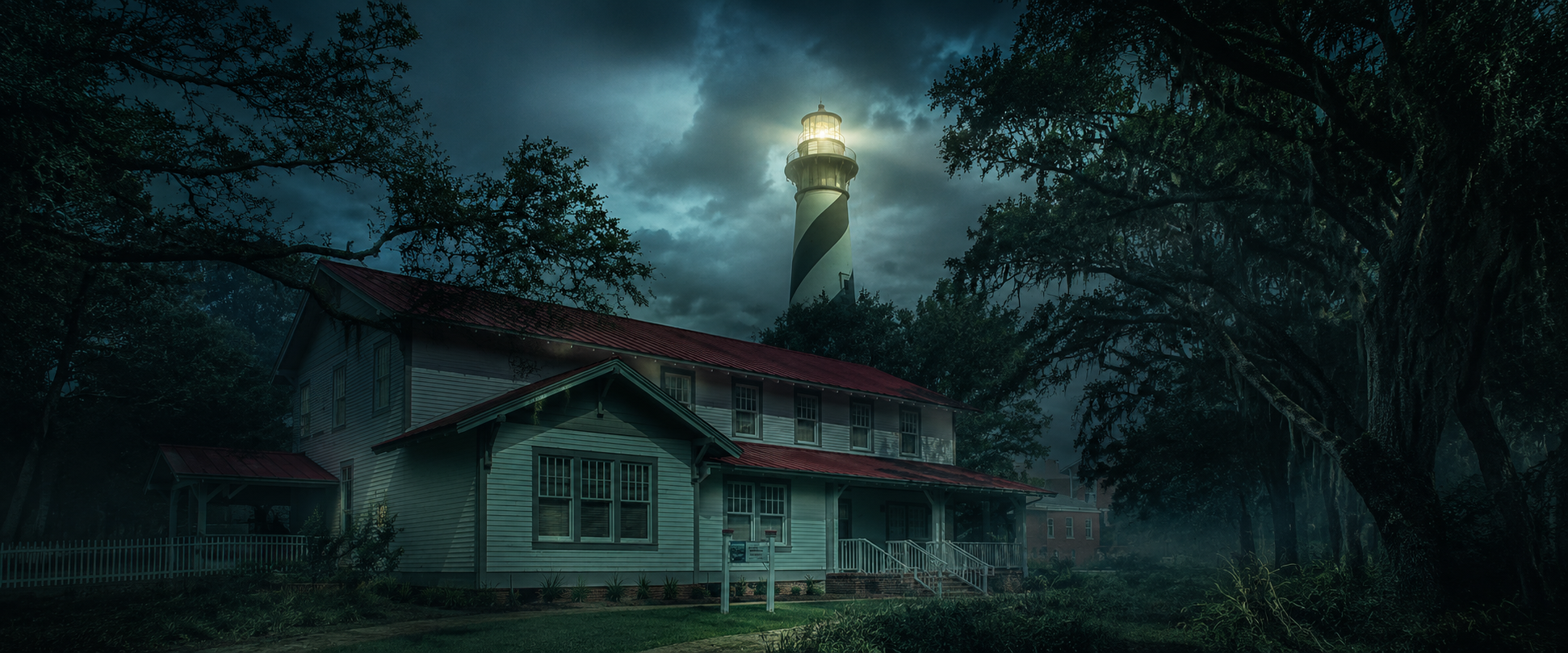
Stand at the base of those 219 spiral steps after dark and listen — because the lighthouse is already listening back. On July 10, 1873, two of Hezekiah Pittee's daughters drowned when a construction cart broke loose and plunged into the bay; people swear Eliza and Mary never quite left. Visitors report disembodied laughter drifting down from the lamp room, music boxes in the gift shop springing open on their own, and the unmistakable sensation of small fingers brushing past in the dark. Ghost Hunters once called it the "Mona Lisa of paranormal sites" — and that was before the shadow figure appeared at the railing.
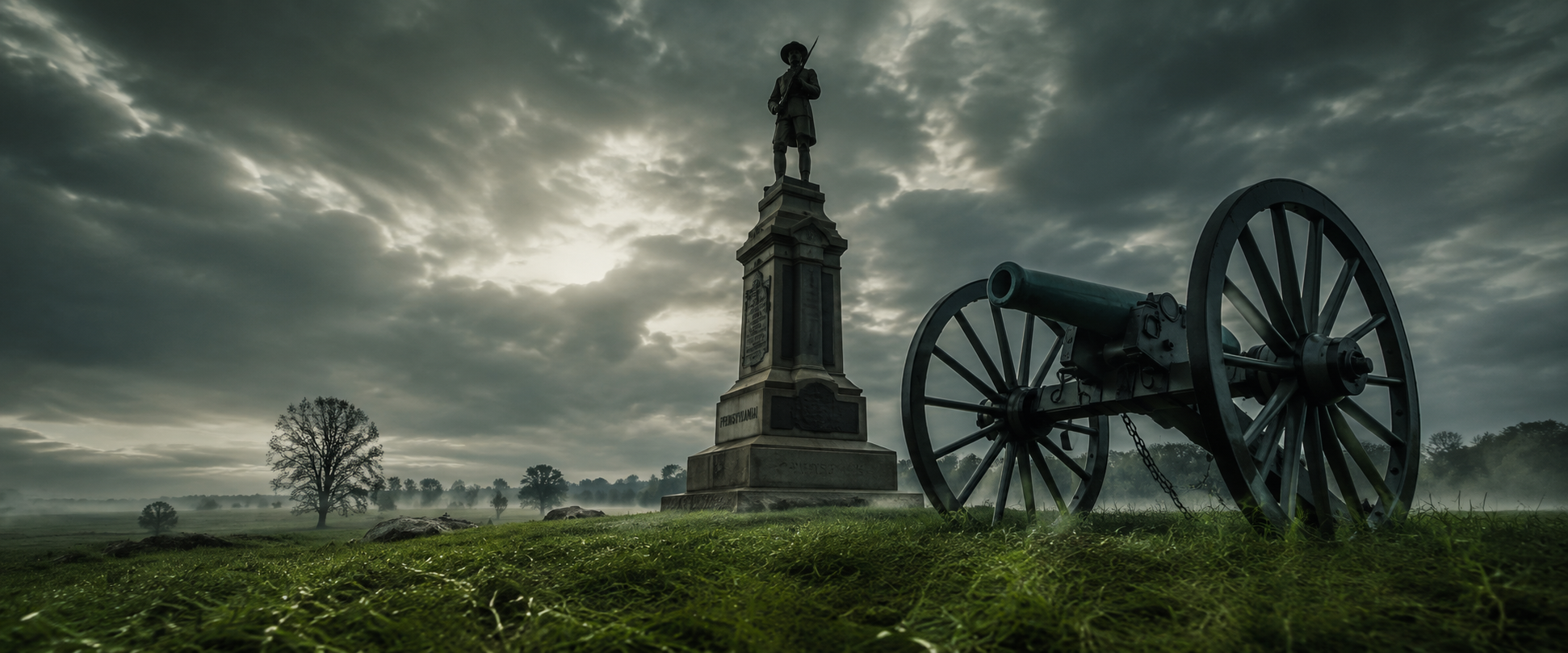
Three days in July 1863 left something in this ground that never quite left back. Visitors walking Devil's Den at dusk report cameras dying without warning, figures appearing in photographs that weren't there moments before — men in grey crouched among the boulders as if the battle never ended. Across Triangular Field, people swear they've heard the rebel yell tear open a silent afternoon, and some have found impressions in the grass, as though bodies were still crawling toward positions no one holds anymore. Stand here long enough, and the battlefield starts to feel less like a memorial and more like a place still fighting.
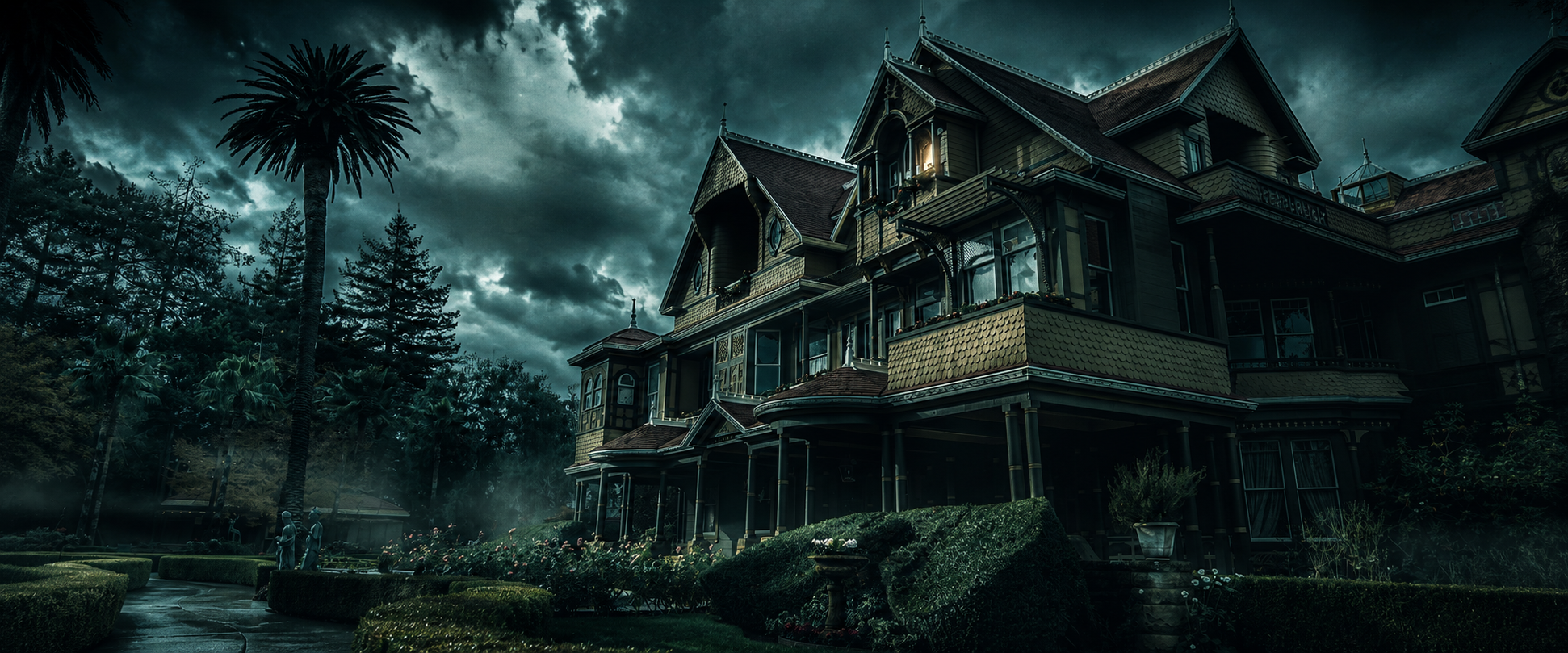
The Winchester Mystery House feels less built than dreamed into being: a Victorian maze of sealed doors, stairways to nowhere, dead ends, narrow passages, and rooms that seem to fold back on themselves. Its haunted reputation centers on Sarah Winchester, the rifle fortune widow said in legend to have built endlessly to confuse or appease spirits connected to Winchester firearms. Visitors come for the architecture, but the unease lives in the pattern of the house itself—160 rooms arranged like a séance in wood, glass, and shadow.
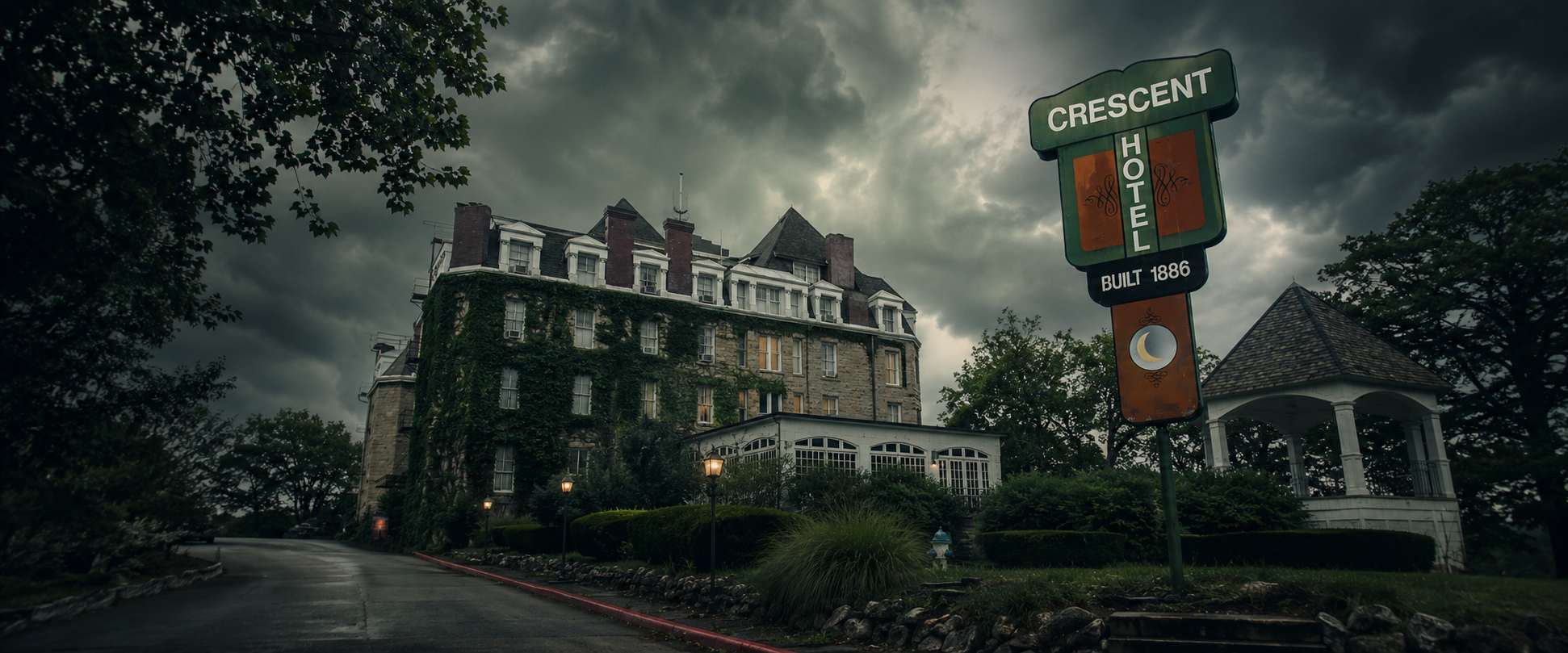
Perched on West Mountain, the Crescent does not simply feel old — it feels occupied. An Irish stonemason named Michael plunged to his death during construction in 1885, and Room 218, where he fell, remains the most charged room in the building: lights misbehave, doors decide things on their own, and guests report something pounding from inside the walls. Deeper in the hotel, a woman named Theodora still introduces herself near Room 419, politely — she was one of Norman Baker's cancer patients — then vanishes mid-conversation. The basement morgue, where Baker quietly moved the bodies, is where most visitors stop speaking altogether.
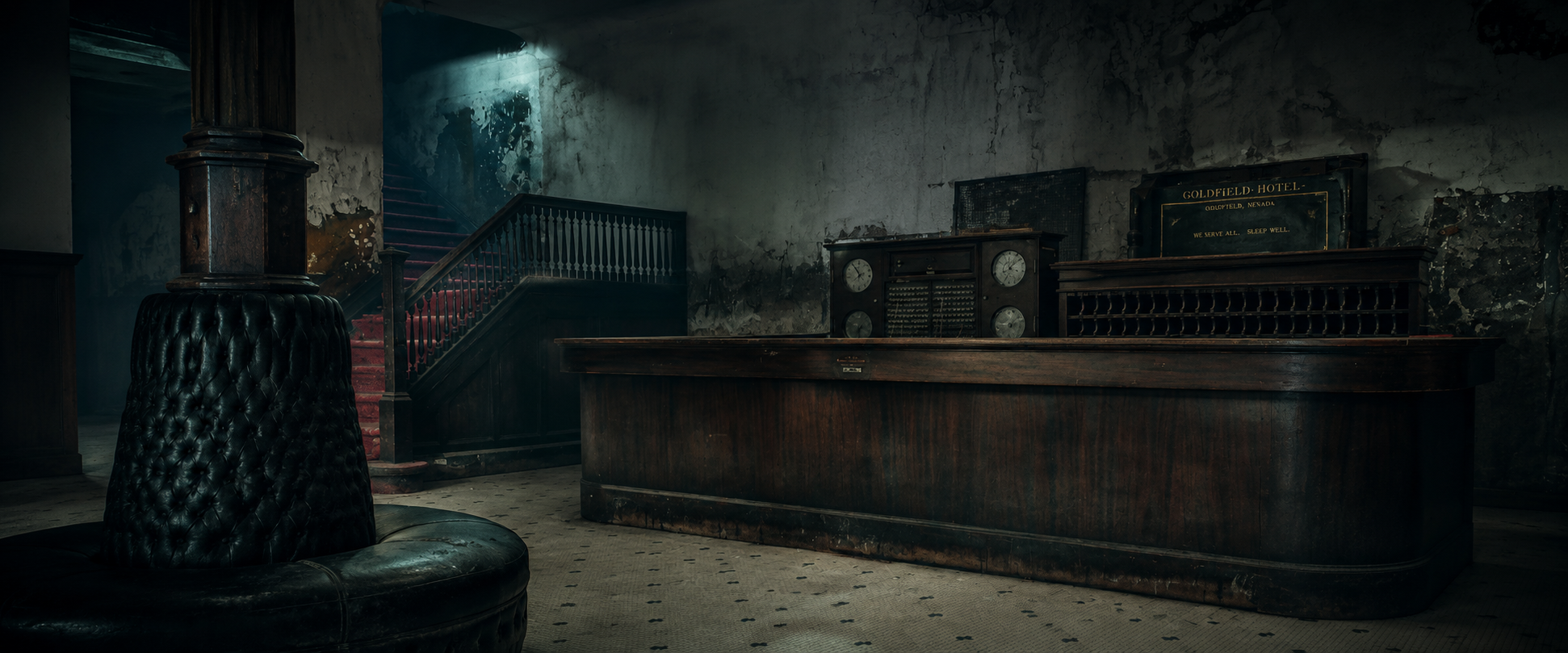
Room 109 is the one people whisper about. According to legend, a young woman named Elizabeth — a prostitute said to be carrying owner George Wingfield's child — was chained to its radiator, the baby torn away and dropped down a mine shaft beneath the building. Visitors swear the room runs cold in ways the desert air can't explain, cameras seize, and something in the walls still sobs. Elsewhere, a phantom called The Stabber prowls the Gold Room; unseen hands have thrown bricks in the basement. Stand inside long enough and the building stops feeling empty.
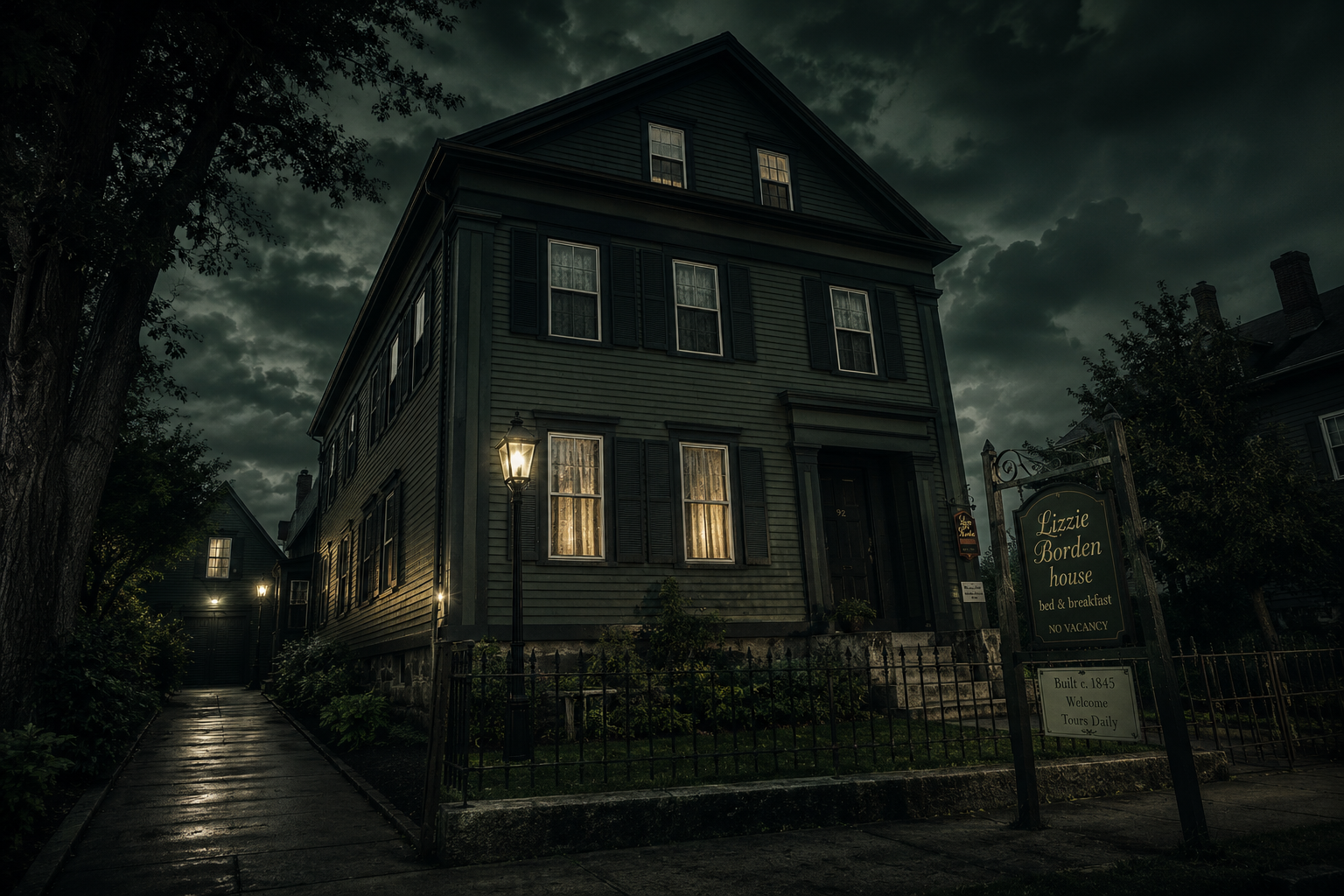
The morning of August 4th, 1892 never really ended at 230 Second Street. Visitors who spend the night here describe a hollow, watching quality to the air — a stillness that isn't peaceful. People report lights guttering on their own, equipment flickering without cause, and the unmistakable sense of being followed room to room by something that doesn't show itself. Stand in the parlor where Andrew Borden was found and the temperature seems to drop a degree for no reason anyone can name. Whatever is left behind here, it does not feel residual. It feels attentive.
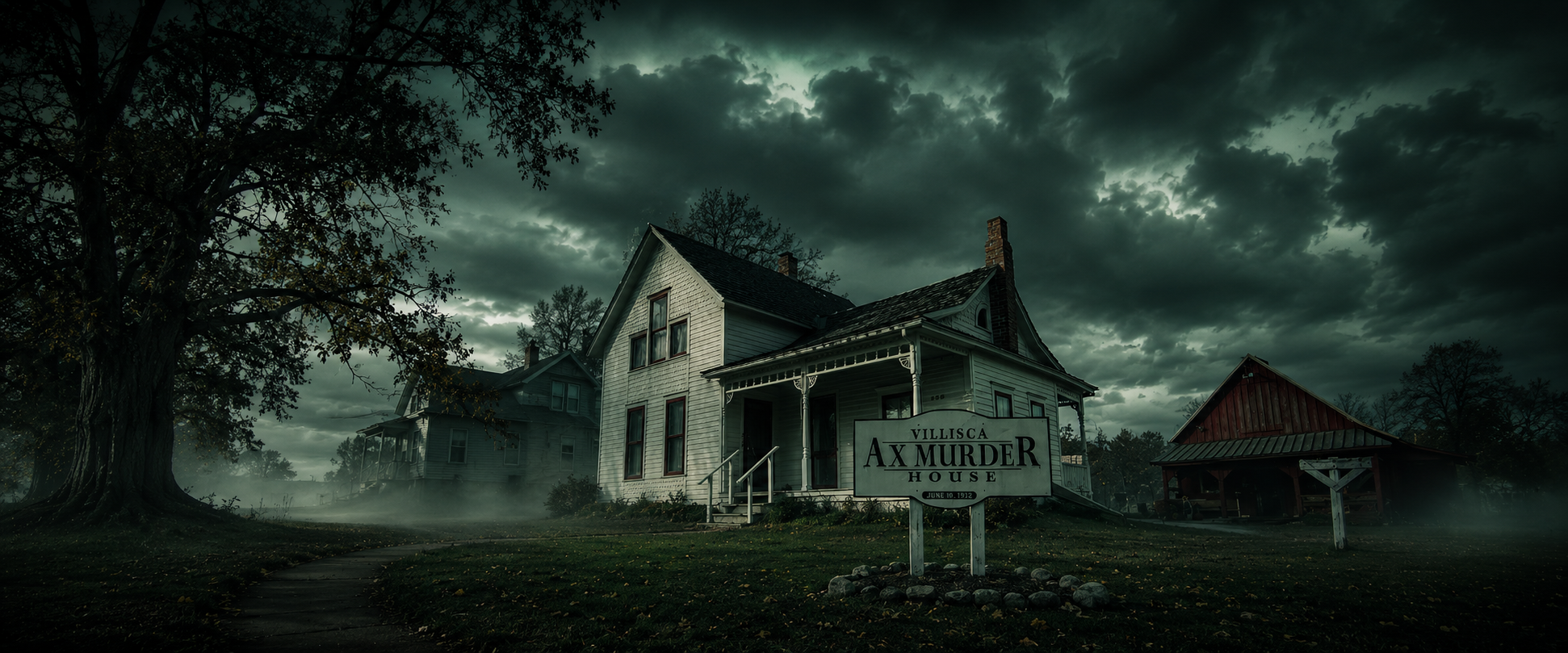
Eight people went to sleep in this modest Iowa home on the night of June 9, 1912, and never woke up. Visitors who linger after dark swear the children are still here — laughter drifting from empty rooms, small shadows crossing doorways. But the children aren't what unnerves people most. The attic is where the killer is believed to have crouched and waited, and those who spend the night say that old patient darkness never fully left — a presence up there, still watching, heavy, unmoved by more than a century of daylight.
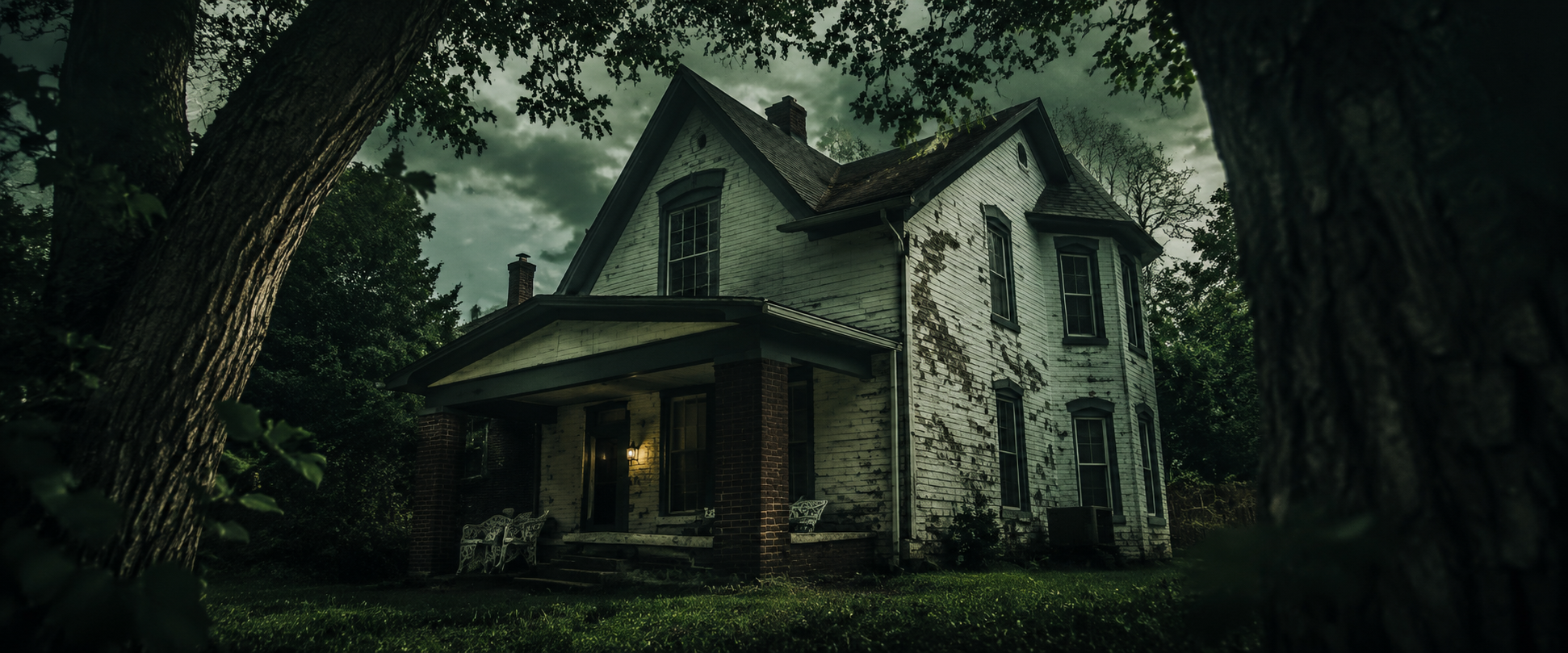
Stand in the front rooms of the Sallie House long enough and something notices you back. Locals tell it this way: a little girl named Sallie died on a makeshift operating table here, the anesthesia not yet taking hold, fear the last thing she felt — and she never quite left. But investigators who've come away scratched and shaken warn that whatever moves through these rooms may be wearing a child's face like a costume. Objects fly. Flames kindle without cause. Tony Pickman, who rented the house in the '90s, left with bloody marks raked across his skin by something unseen.
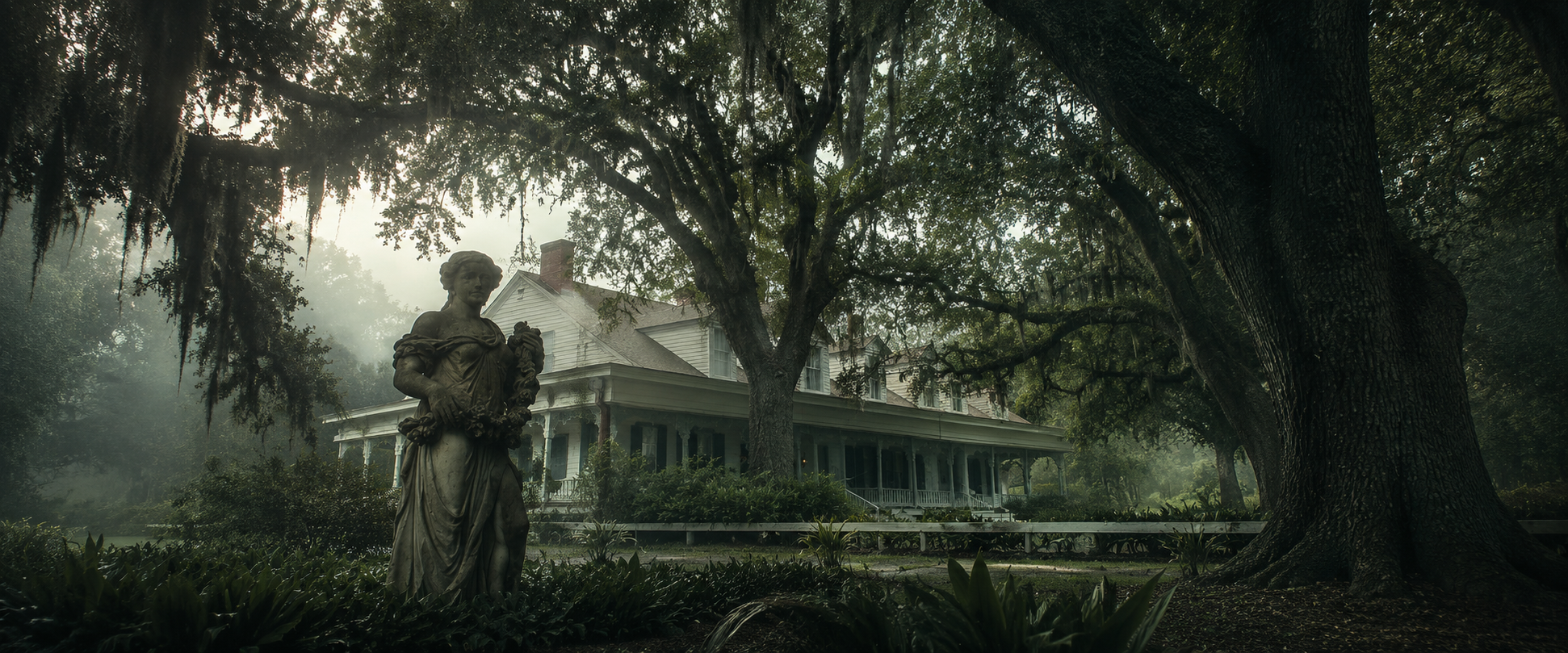
Walk the 120-foot veranda at dusk and you may feel it before you see anything — a heaviness in the moss-draped air, the sense of being watched from the windows. Guests and guides alike swear they hear footsteps climbing the main staircase and stopping, always, on the 17th step. Handprints appear inside sealed mirrors. A grand piano echoes a single chord with no one near the keys. And presiding over it all, people say, is Chloe — green-turbaned, half-seen in doorways — a presence the plantation has never fully let go.
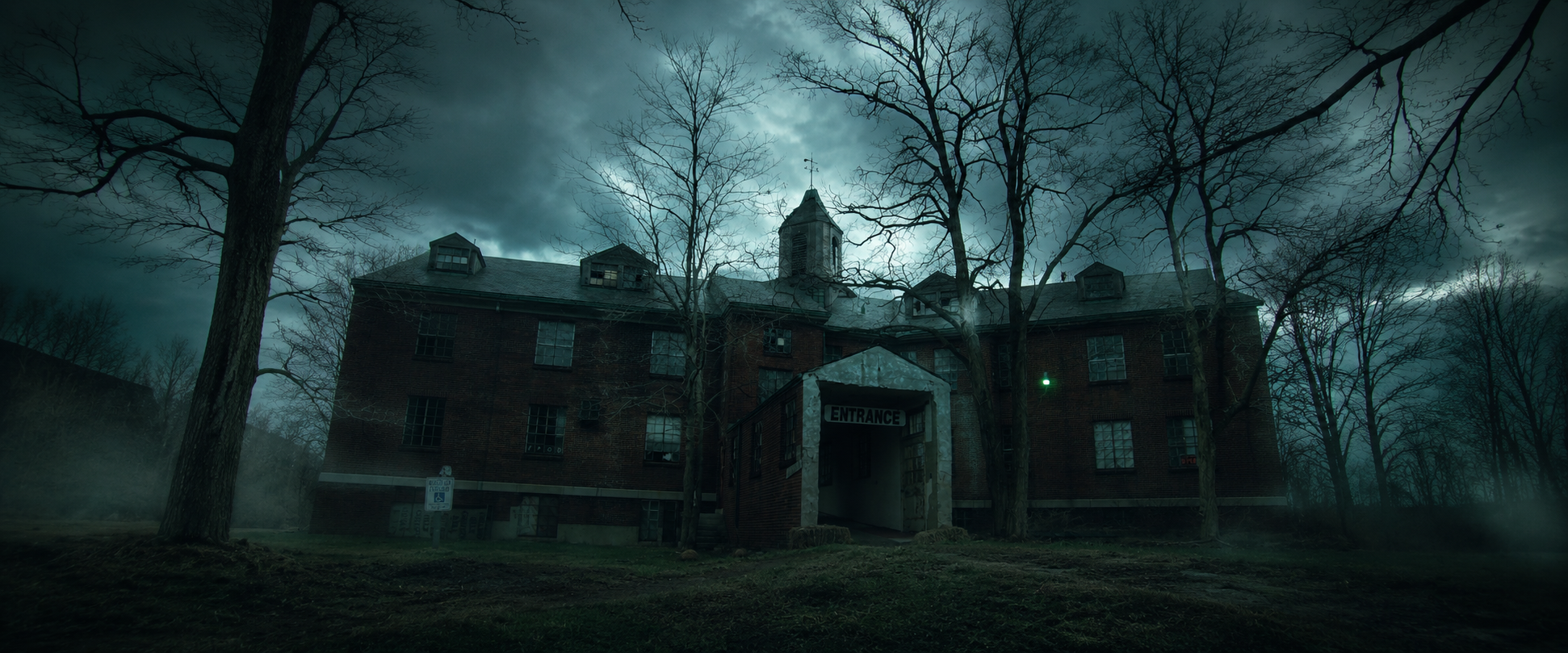
People say the Shadow Hallway on the second floor never fully empties — dark shapes slip in and out of doorways, some crawling, some standing seven feet tall. That towering silhouette is believed by regulars to be Roy, a former resident who never checked out. One floor down, a blind woman named Hattie reportedly keeps calling 'hello' into the dark, her voice still turning up on EVP recorders decades later. The morgue runs cold even in summer, the psych ward answers questions nobody asked, and a subterranean tunnel connects it all — with something, visitors swear, keeping pace.
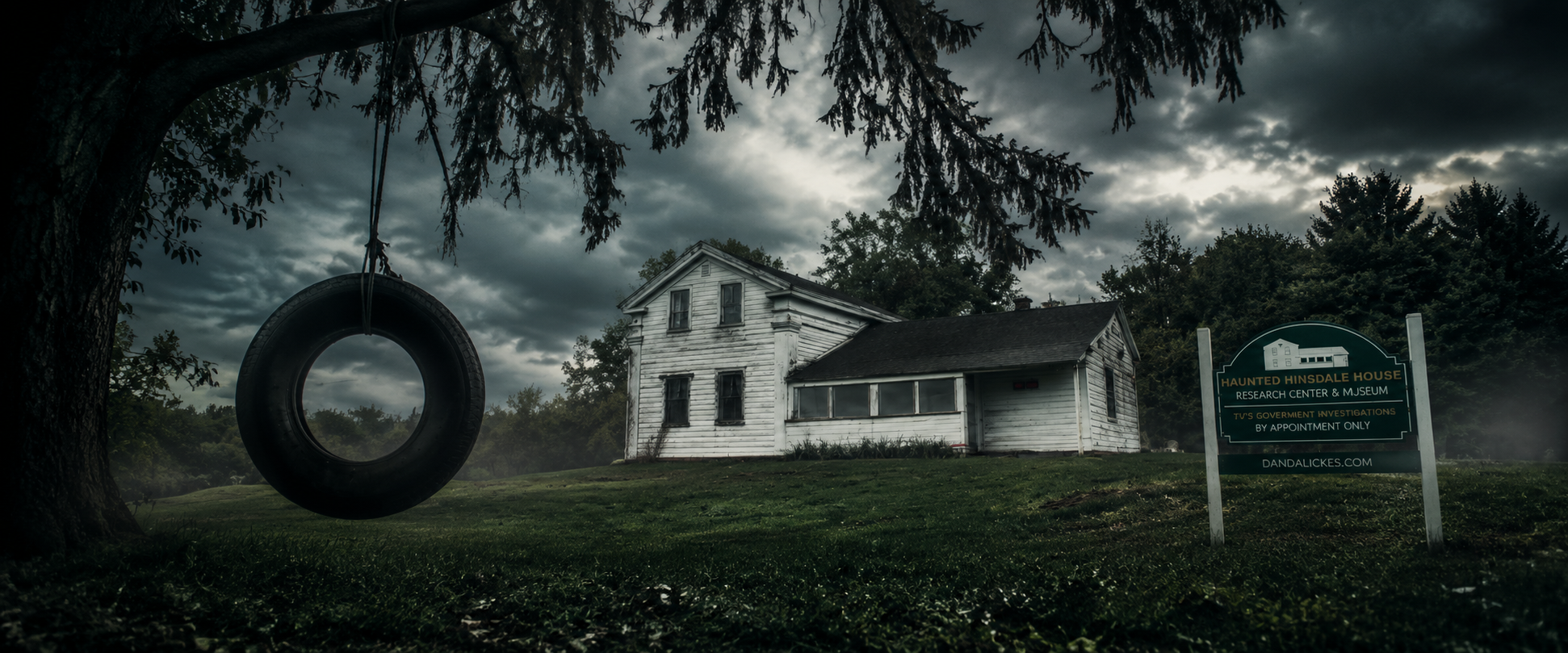
Hinsdale House has the nervous quiet of a place that learned to wait. Its reputation centers on the Dandy family, who moved into the rural New York home in the early 1970s and reported lights switching on and off, objects moving, disembodied voices, apparitions, strange smells, chanting from the woods, and activity that grew violent enough to bring in clergy. The house is now a known paranormal investigation site, but the stories still gather around the same idea: something there does not simply haunt the rooms — it watches from them.
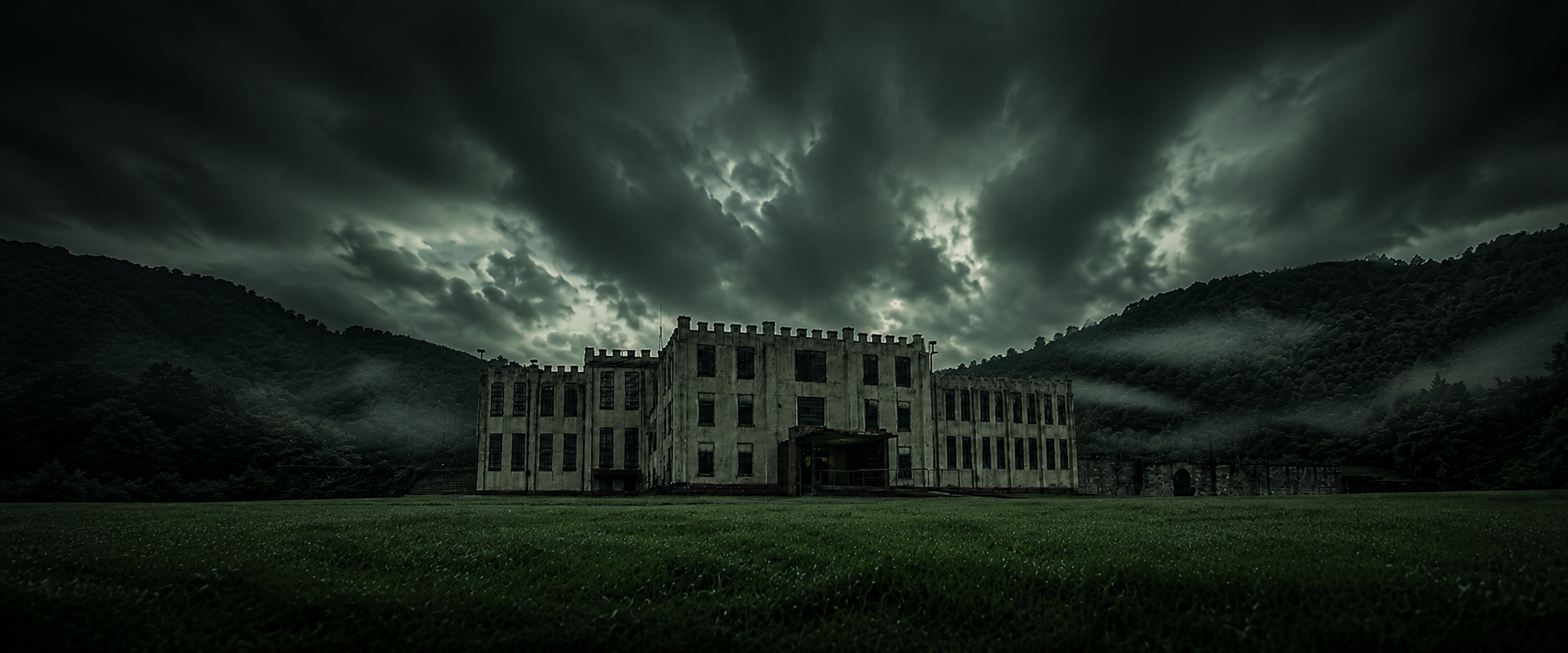
They called it the End of the Line, and something in those stone cellblocks seems to remember why. Visitors report being touched by hands they cannot see, shoved by presences that aren't there, and hearing disembodied growls echoing through corridors where the lights long ago quit. In the auditorium, people swear something crawls across the floor — low, slow, and wrong — a figure locals call the Creeper, said to be a man who died broken and forgotten in solitary. The mountains press in close here. Stand in the yard and it's easy to believe the dead never found a way out either.
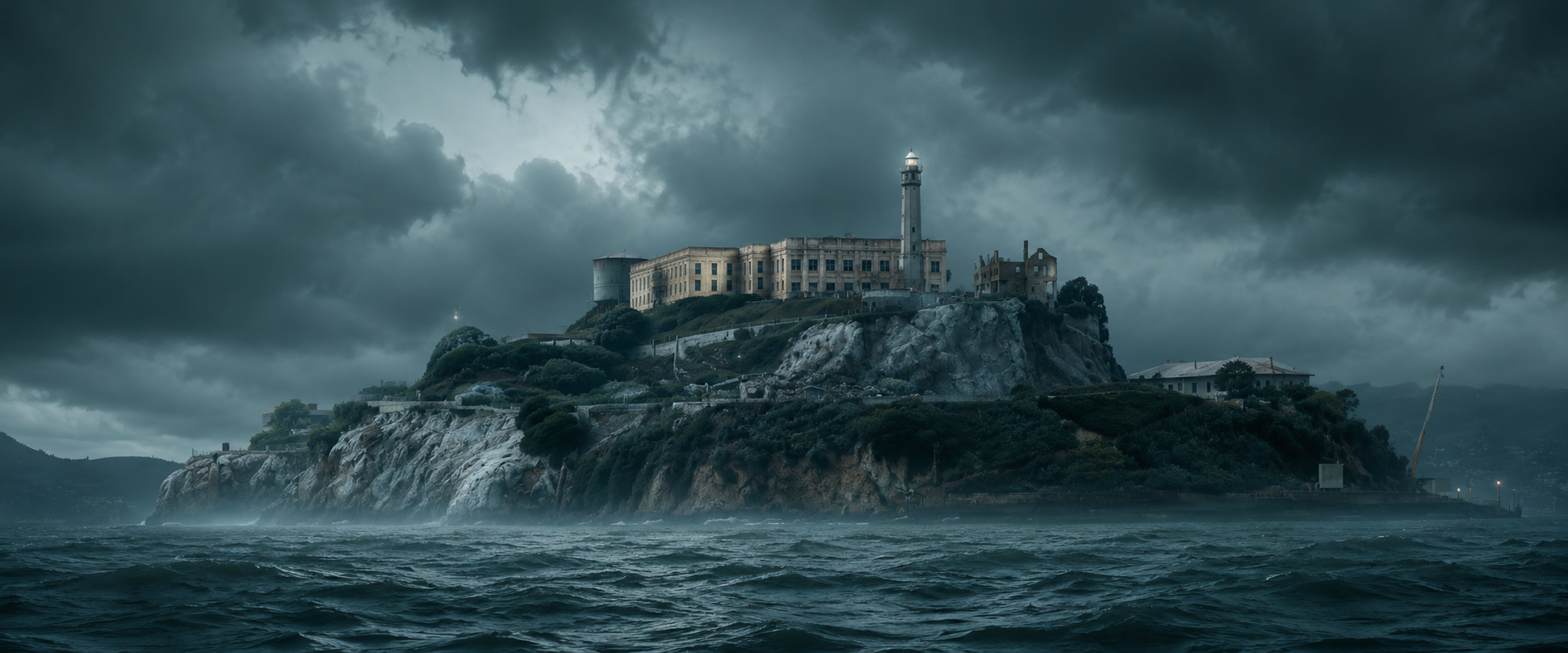
Alcatraz Island has the kind of haunting that begins before the ferry leaves the dock: a prison cut off by cold water, wind, fog, and a reputation built on isolation. Visitors and paranormal accounts most often point to D Block and Cell 14D, where people report sudden cold, dread, voices, and the feeling of something waiting in the dark. Other stories describe unseen footsteps, sobbing, whispers, figures in corridors, and activity in the hospital and utility passages beneath the cellhouse. Whether these are ghosts or the island’s atmosphere pressing back, Alcatraz feels like a place where punishment did not end when the doors were locked.
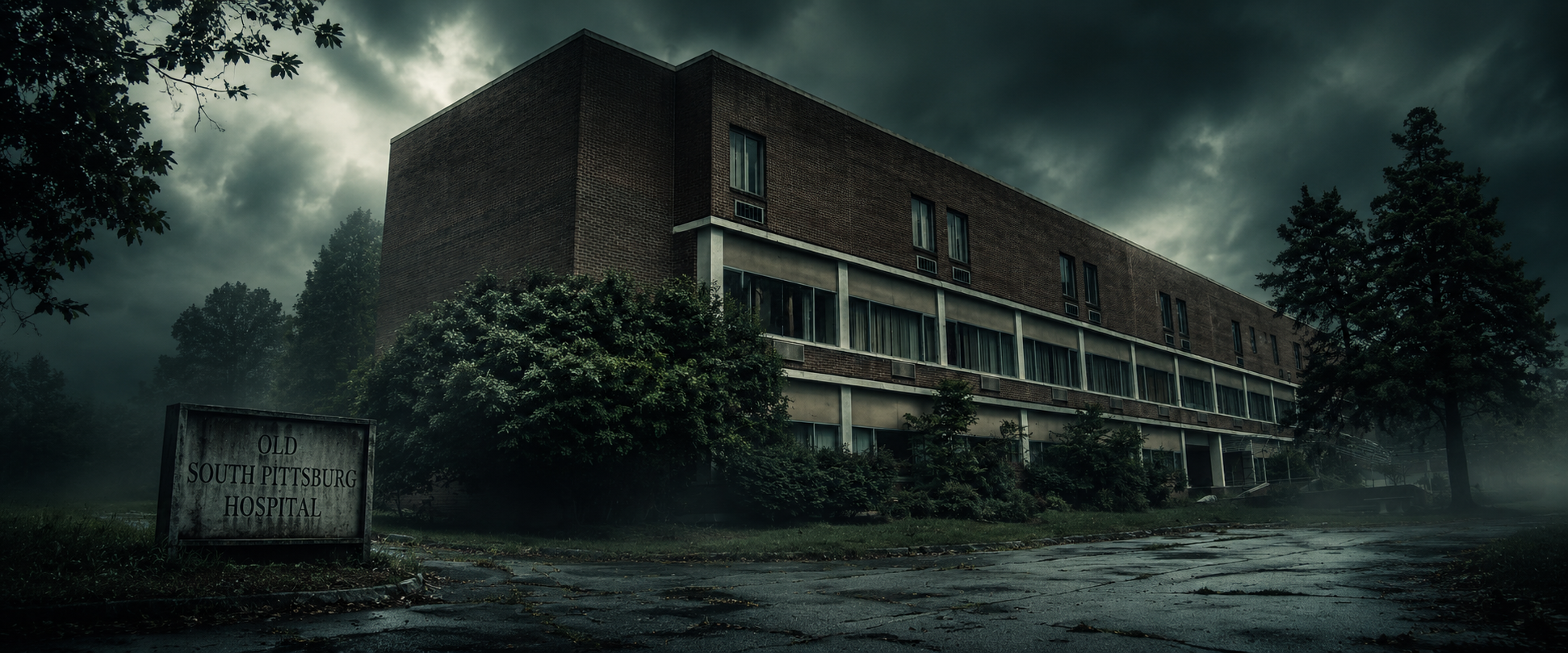
The Old South Pittsburg Hospital talks back after dark — literally, people say. Investigators report disembodied voices slicing through silence, phantom footsteps shadowing them between floors, and infant cries drifting from a maternity ward empty since 1998. Shadow figures reportedly stalk the third-floor surgical wing, while something enormous — witnesses put it above seven feet — is said to pace the upper hall and has allegedly told the living, out loud, to leave. A gentler presence, a small boy named Buddy, is said to still wander the wards, curious and unhurried.
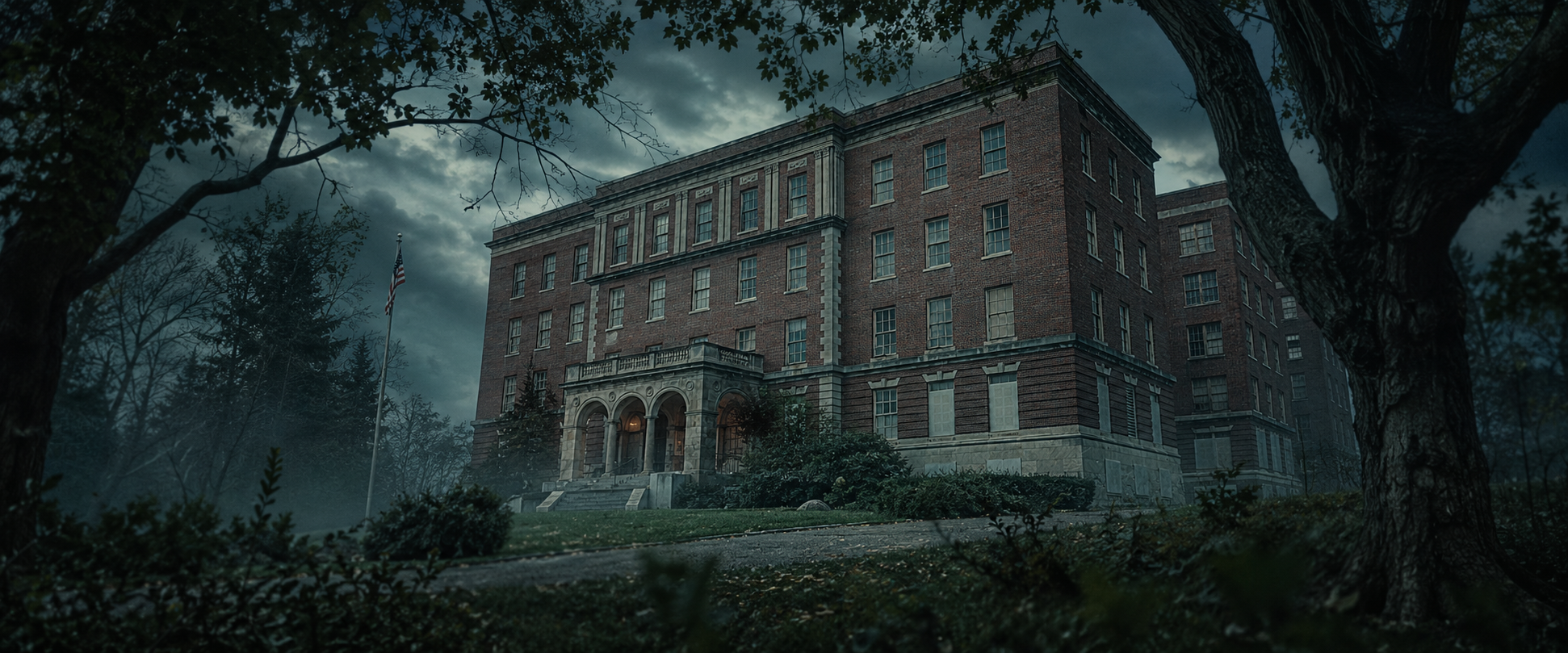
The hallways of the Kay Beard Building don't just creak — they answer back. Visitors swear shadow figures drip from the ceilings, materializing and dissolving before anyone can look directly at them. A retired K9 officer once chased footsteps through the corridor; his dog froze and refused to go further. Staff report being touched, grabbed, and having equipment moved mid-investigation. Beneath it all lies a forgotten cemetery where some 7,000 unclaimed patients are buried in unmarked graves — and those who linger say the ground feels like it's still listening.