0Investigations
—Avg rating
0Sightings
0Evidence
Paranormal summary
Historical context
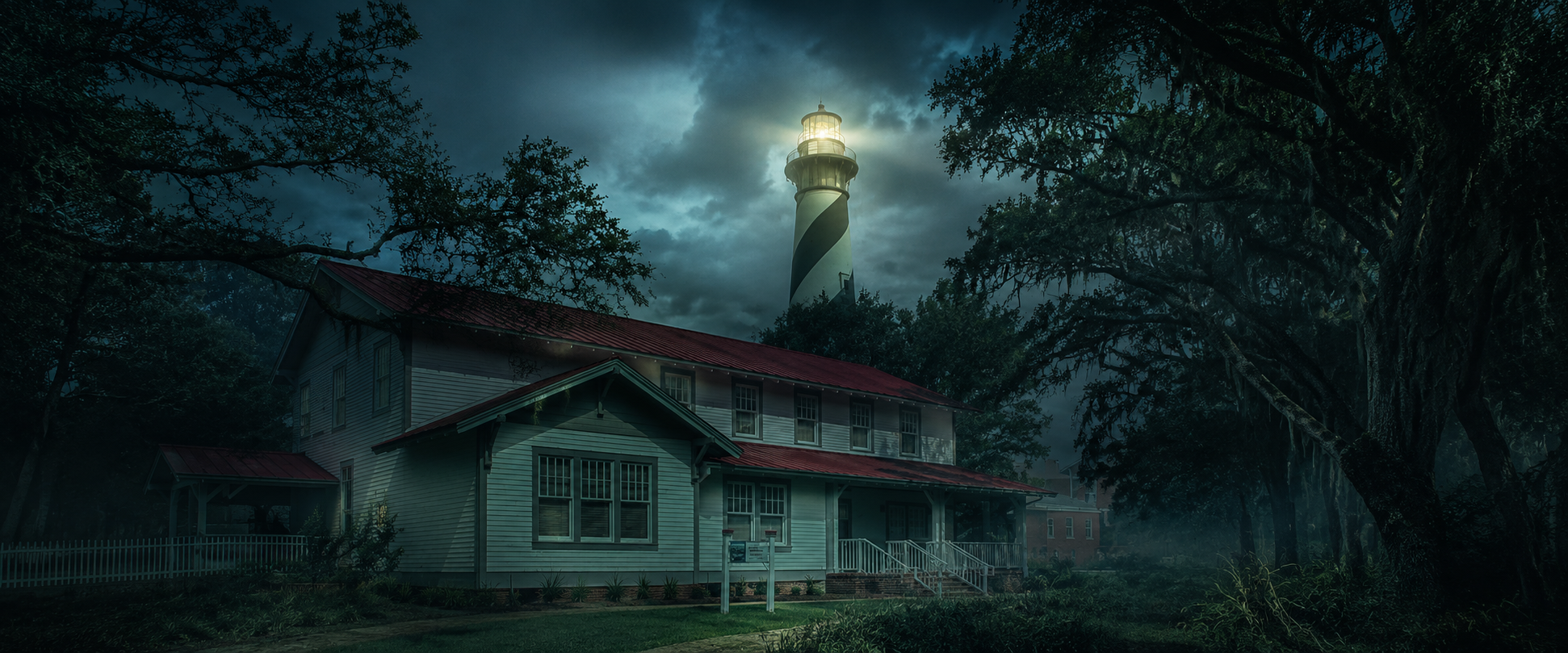
Stand at the base of those 219 spiral steps after dark and listen — because the lighthouse is already listening back. On July 10, 1873, two of Hezekiah Pittee's daughters drowned when a construction cart broke loose and plunged into the bay; people swear Eliza and Mary never quite left. Visitors report disembodied laughter drifting down from the lamp room, music boxes in the gift shop springing open on their own, and the unmistakable sensation of small fingers brushing past in the dark. Ghost Hunters once called it the "Mona Lisa of paranormal sites" — and that was before the shadow figure appeared at the railing.
Historical context
The current St. Augustine Lighthouse was completed in 1874 on Anastasia Island — its predecessor, a Spanish-era coquina tower, had obligingly collapsed into the Atlantic in 1880, as if clearing the stage. Superintendent Hezekiah H. Pittee oversaw construction of the 165-foot brick tower, whose distinctive black-and-white spiral was a deliberate mariner's landmark. Designed by Paul Pelz — later famous for the Library of Congress — it is the oldest and tallest brick structure in St. Augustine, and a designated National Historic Landmark. The record shows a lighthouse. The legend insists it is something considerably more attentive.
Rate this haunt
Be the first to rate St. Augustine Lighthouse.
★★★★★
Sign in to rate this haunt.
Location info
TypeHouse
CitySt. Augustine
StateFlorida
CountryUnited States
Address100 Red Cox Dr, St. Augustine, FL 32080
Accesspublic
Inv-friendlyyes
Region tags
St. AugustineFlorida
Known entities
👻
Eliza Pittee
Elder daughter of superintendent Hezekiah Pittee, who drowned in 1873. Reportedly seen drifting the grounds in a blue dress, and heard laughing in the tower at night.
👻
Mary Pittee
Younger Pittee daughter who drowned alongside Eliza. Said to be among the playful presences responsible for disembodied laughter and inexplicable door activity.
👻
The Shadow Figure
A dark, unidentified silhouette reportedly seen peering down over the spiral staircase railing; captured on film during a Ghost Hunters investigation.
Explore nearby
Castillo de San Marcos · St. AugustineAugustin Inn · St. AugustineCasablanca Bed and Breakfast · St. AugustineSpanish Military Hospital · St. AugustineAnastasia Island · St. AugustineFlagler College · St. AugustineFlorida School for the Deaf and Blind · St. AugustineFort Castillo De San Marco · St. AugustineHuguenat Cemetery · St. AugustineOld City Gates · St. AugustineOld Jail · St. AugustineSt. Francis Inn · St. Augustine