0Investigations
—Avg rating
0Sightings
0Evidence
Paranormal summary
Historical context
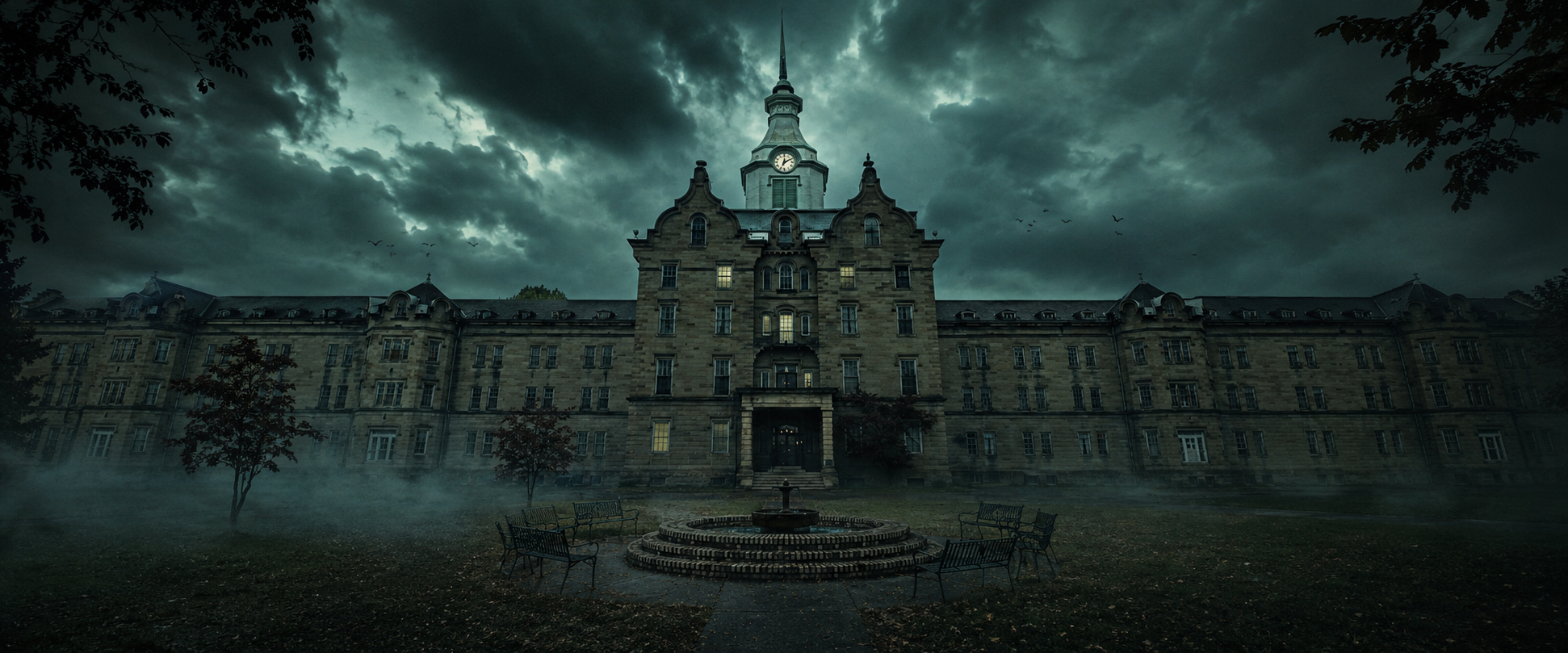
Trans-Allegheny Lunatic Asylum feels built to echo. Its long Kirkbride corridors, patient wards, isolation rooms, morgue, and operating spaces are tied to reports of voices, footsteps, shadows, cold spots, screams, and figures seen where no living person should be. The haunting is often described as crowded rather than singular: patients, staff, and darker presences layered into a building that held generations of suffering. At night, the asylum does not feel abandoned. It feels occupied by memory that has learned to move.
Historical context
Construction began in 1858 on what was meant to be a humane revolution — a Kirkbride-plan asylum built on Thomas Kirkbride's belief that good architecture could heal troubled minds. It opened in 1864, was designated a National Historic Landmark, and is the largest hand-cut stone masonry structure in North America. By the 1950s it housed ten times its intended population; unsupervised patients set fires and killed one another, and local papers ran investigations into the squalor. It closed in 1994 — at which point the building, graciously, became someone else's problem.
Rate this haunt
Be the first to rate Trans-Allegheny Lunatic Asylum.
★★★★★
Sign in to rate this haunt.
Location info
🌐 Official websiteTypeAsylum
CityWeston
StateWest Virginia
CountryUnited States
Accesspublic
Inv-friendlyyes
Region tags
WestonWest Virginia
Known entities
👻
Lily
Child spirit born inside the asylum after her mother's admission; died of pneumonia at age nine. Reported to tug clothing, giggle, and steal candy from visitors.
👻
Ruth
Aggressive older woman in life, reportedly violent toward men. Said to haunt her first-floor holding cell and make her hostility toward male visitors known.
👻
Dean
Spirit of a patient allegedly murdered by fellow inmates Big Jim and David Mason. Reported to haunt the room where he was killed.
Explore nearby
Weston Lunatic Asylum · WestonBlennerhassett Island · ParkersburgSandy Huff Hollow Road · IaegerHarpers Ferry · Harpers FerryTrain Tracks · PaxBeckley Junior High · BeckleyMacedonia Road · BuckhannonCharleston Train Depot and Carriage Trail · CharlestonRailroad · Harper's FerryHacker's Creek Hill · HodgesvilleWest Run Road · Monongalia CountyCheat Lake · Morgantown